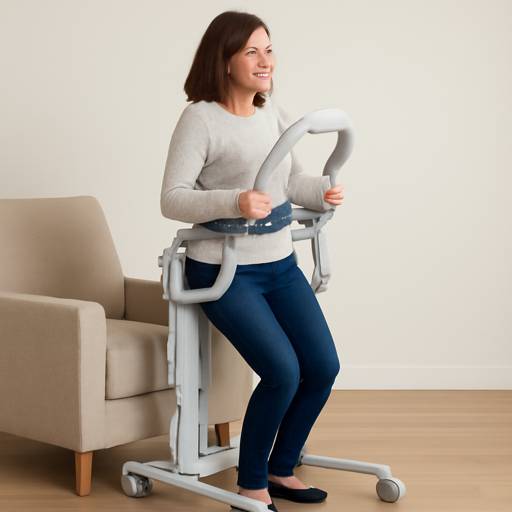
For millions navigating the challenges of reduced lower-body strength, the simple act of rising from a seated position can become a daily negotiation between dignity and dependence. Traditional transfer methods often place immense strain on both the patient and the caregiver, creating a cycle of discomfort and risk. The electric sit to stand lift emerges not merely as a piece of medical equipment, but as a profound tool for restoring autonomy. Unlike manual alternatives that demand significant physical exertion, these powered units utilize a smooth, motor-driven mechanism to support the user through a natural standing motion. This technology bridges a critical gap for individuals who possess partial weight-bearing ability yet lack the consistent stability to stand unassisted. The result is a transfer process that prioritizes safety, reduces muscular fatigue for staff, and preserves the user’s sense of agency in their own mobility.
At its core, the value of an electric sit to stand lift lies in its biomechanical intelligence. The device’s padded support sling cradles the upper back and thighs, while the base frame provides a stable platform. As the lift activates, it follows the body’s physiological arc of rising, minimizing the shear forces that can damage fragile skin or exacerbate existing injuries. This precision is particularly critical in environments like rehabilitation centers and long-term care facilities, where repetitive transfers can lead to chronic caregiver back injuries or patient anxiety. The integration of a battery-powered actuator ensures that the lift can operate without a constant wall outlet, offering flexibility in home settings where room layouts change. This balance of power and portability makes the electric sit to stand lift an indispensable asset for those seeking a safer, more respectful approach to daily mobility challenges.
Engineering Autonomy: The Mechanism and Clinical Application
The efficacy of a sit to stand lift is deeply rooted in its mechanical design, which harmonizes hydraulic or electric actuation with ergonomic support. The system typically features a low-profile base that slides under beds, chairs, or toilets, a crucial detail for seamless transfers. The user is fitted with a specialized vest or sling that connects to the lift’s mast. As the motor engages, the mast slowly tilts forward and upward, guiding the user to a standing position. This motion is not a jerky pull but a controlled, progressive lift that mirrors the natural pivot of the hips and knees. Many models incorporate a spreadable base for enhanced stability, along with lockable casters to prevent unintended movement during the transfer. The ability to adjust the height of the lifting arm ensures compatibility with various seating surfaces, from low armchairs to raised hospital beds.
In clinical practice, the electric sit to stand lift is not a one-size-fits-all solution but a targeted intervention for a specific patient profile. Candidates must demonstrate the ability to bear weight on their legs, have sufficient upper body strength to hold onto the lift’s handles or sling, and possess the cognitive ability to follow simple commands. For these individuals, the lift facilitates a standing transfer rather than a passive, full-body lift. This has profound therapeutic implications. Repeated standing motion helps maintain bone density, improves circulation, and reduces the risk of contractures. For therapists, it allows for active patient participation in the transfer, which is essential for gait training. Furthermore, the system significantly lowers the biomechanical load on caregivers. Studies indicate that using an electric lift reduces the risk of musculoskeletal injuries among healthcare workers by over 60% compared to manual techniques, making it a cornerstone of workplace safety programs. The device’s versatility also extends to bariatric applications, with models designed to accommodate higher weight capacities without compromising stability, ensuring that larger individuals receive the same level of safe, dignified support.
Strategic Selection: Evaluating an Electric Sit to Stand Lift for Your Care Environment
Selecting the right equipment requires a careful evaluation of the user’s physical abilities and the environmental constraints of the care setting. A key differentiator is the type of sling system. High-quality slings are crafted from breathable, easy-to-clean materials and often feature snap-lock or loop connections for quick attachment. The contour of the sling should support the patient without applying undue pressure to the abdomen or shoulders. Equally critical is the lift’s turning radius and base width. A wider base offers more stability but may be difficult to maneuver through narrow doorways or around furniture, making pivot-capable models preferable for tight spaces. Battery life is another practical factor; a unit that supports 15 to 20 transfers per charge is standard for daily use, with automatic shut-off and low-battery indicators preventing unexpected stops during a transfer.
Beyond the technical specifications, the integration of an electric sit to stand lift into a care plan demands a thorough risk assessment and staff training. Facilities must conduct environmental evaluations to ensure adequate clearance and flooring suitability. One effective strategy is to implement a trial period with a specific model, allowing staff to test its ergonomics and the patient to experience its comfort. This real-world feedback is invaluable. For example, a rehabilitation unit might find that a lift with a weight-activated brake increases safety during standing pauses, while a private home may benefit from a lighter, more compact model that can be easily stored. The goal is to create a match between the device’s capabilities and the user’s unique needs, whether that is post-operative recovery, progressive neurological conditions, or age-related frailty. By focusing on these strategic considerations, caregivers and families can select a solution that enhances quality of life while minimizing the physical and emotional toll of transfers.
Beyond the Lift: Real-World Impact and Specialized Environments
The greatest testament to the value of these devices comes from their application in diverse, demanding environments. In acute rehabilitation centers, the electric sit to stand lift is a cornerstone of mobility training. For instance, in a study of hip replacement recovery protocols, patients who used a sit-to-stand lift for early transfers showed a 30% faster progression to independent standing compared to those assisted manually. The device allowed therapists to focus on proper gait mechanics rather than physical support, reducing patient fear and increasing participation. Similarly, in long-term care facilities, the technology transforms daily routines. A resident with Parkinson’s disease, who might otherwise require two staff members for toileting, can now be transferred by a single caregiver with consistent, smooth assistance. This preserves the resident’s dignity and significantly reduces the risk of falls.
Another impactful application is in home care for patients with advanced multiple sclerosis or spinal cord injuries. The lift enables them to participate in standing weight-bearing activities, which are crucial for preventing pressure ulcers, improving bowel function, and maintaining bone density. Caregivers report a dramatic reduction in physical strain, allowing them to provide care for longer periods without burnout. The technology also supports specialized subpopulations, such as those in bariatric care. High-capacity electric lifts provide the necessary power and stability to safely handle patients weighing up to 800 pounds, eliminating the dangerous practice of manual transfers that put both patient and caregiver at risk. These real-world examples underscore that the electric sit to stand lift is more than a piece of equipment; it is a tool that fosters independence, protects health, and redefines the landscape of patient mobility across the care continuum.