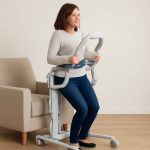
Across the healthcare and home care landscapes, one challenge consistently ranks highest: the safe, dignified transfer of a patient from a seated to a standing position. For individuals recovering from surgery, living with progressive muscle weakness, or managing the natural effects of aging, the simple act of standing can become a monumental and risky task. Traditional manual lifting techniques place immense strain on caregivers, leading to chronic back injuries, while simultaneously jeopardizing patient security. This is where modern engineering meets practical care. A sit to stand lift for sale represents a paradigm shift, offering a clinical solution that respects both the patient’s autonomy and the caregiver’s physical well-being. Unlike full-body sling lifts, these devices are designed for individuals who possess some weight-bearing capacity and trunk control, making them the ideal bridge between independent ambulation and total dependence. The technology focuses on leveraging the patient’s own strength during the transfer process, promoting rehabilitation and preserving muscle tone. For facilities evaluating their equipment inventory or families seeking to keep a loved one home safely, understanding the nuances of this equipment is the first step toward a more sustainable care ecosystem.
Understanding the Mechanism and Core Benefits of Active Lifting Technology
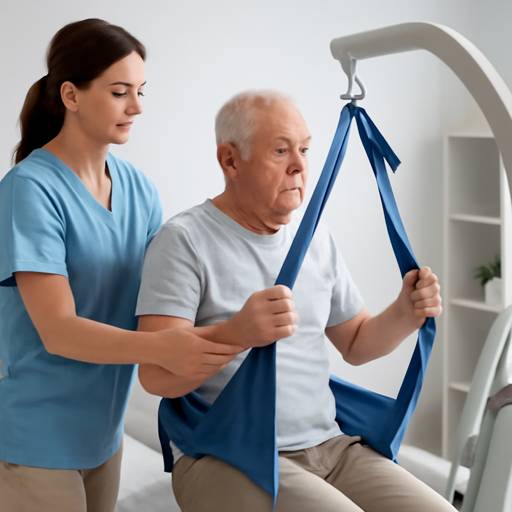
The fundamental distinction of a sit-to-stand lift lies in its operational philosophy. It does not simply hoist a patient; it assists them in rising using their own physical capability. The device typically features a padded knee brace that stabilizes the lower legs and prevents the patient from sliding forward, while a harness or vest wraps around the patient’s torso and under the arms. As the lift activates, either through a manual hydraulic pump or a battery-powered motor, the patient is brought from a seated position to a standing one. This motion mimics the natural biomechanics of standing, engaging the quadriceps, glutes, and core muscles. Active participation is a critical clinical advantage. For patients undergoing physical therapy after a hip replacement or stroke, this active engagement is crucial for neuroplasticity and muscle re-education. The alternative is a passive lift, which can accelerate muscle atrophy and reduce a patient’s motivation to recover.
From a caregiver’s perspective, the benefits are equally profound. The ergonomic design eliminates the need for awkward bending and twisting that causes debilitating back injuries. Instead of lifting a patient’s full weight, the caregiver guides the lift’s base under the bed or chair and operates the controls. This shift from brute force to mechanical advantage reduces the risk of musculoskeletal disorders, which are the leading cause of turnover and disability in nursing staff. Furthermore, the psychological impact on the patient cannot be overstated. Being lifted in a full sling can feel passive and demoralizing. In contrast, using a sit-to-stand lift fosters a sense of agency. The patient is an active participant in their own mobility, which significantly boosts morale and reduces the fear of falling. The result is a transfer that is faster to execute than a sling lift, creates less disruption to the daily schedule, and maintains a higher standard of dignity. For any clinic or home considering a sit to stand lift for sale, these operational and therapeutic advantages translate directly into higher patient satisfaction and lower operational costs related to injury claims.
Clinical Applications and Patient Selection: Who Benefits Most?
The efficacy of a sit-to-stand lift is contingent upon correct patient assessment. It is not a universal solution; rather, it excels in specific clinical scenarios. The ideal candidate is a patient who can bear at least fifty percent of their body weight through their legs and possesses sufficient upper body strength to hold onto the lift’s handles or grip the vest. Common candidates include individuals with bilateral knee or hip replacements, patients with Parkinson’s disease in the middle stages who experience rigidity but have functional leg strength, and bariatric patients who are de-conditioned but weight-bearing. In these cases, the lift provides the necessary stability to overcome initial weakness or fear. Conversely, patients with severe cognitive impairment who cannot follow directional commands, those with an unhealed hip fracture where weight-bearing is contraindicated, or individuals with extreme leg spasticity may be better served by a full-body lift.
Real-world applications vary widely. In an acute care hospital setting, these lifts are invaluable on orthopedic floors, reducing the number of staff required for post-operative ambulation. A case study from a medium-sized rehabilitation center showed a forty percent reduction in staff sick days after transitioning from manual to sit-to-stand lift protocols for post-surgical patients. In long-term care facilities, these devices are used for daily transfers to and from wheelchairs, commodes, and beds, maintaining resident mobility and preventing the cascade of complications associated with bedrest, such as pneumonia and pressure ulcers. In the home environment, the portability of many models is a significant factor. They can be wheeled from bedroom to bathroom, facilitating transfers that were previously impossible for a single caregiver. However, families must measure doorways and ensure floor surfaces are compatible with the lift’s base legs. The choice between a fixed-height and a height-adjustable model also impacts usability. Height-adjustable models allow the base to slide under varying bed heights, while fixed-height models are often lighter and less expensive. Regardless of the model, the consistent outcome is a safer transfer process that preserves the patient’s remaining abilities while shielding the caregiver from harm.
Evaluating Cost, Durability, and the Secondary Market for Long-Term Value
The decision to purchase a sit-to-stand lift is a significant capital investment, but one that must be weighed against the recurring costs of care, injury, and equipment rental. New, high-end models with advanced battery systems, electric height adjustment, and increased weight capacities often command a premium price. However, the total cost of ownership extends beyond the initial sticker price. Durability is a primary concern. Commercial-grade lifts used in a facility subject to twenty or more transfers per day require robust casters, sealed actuators, and frames designed to withstand rigorous cleaning with harsh disinfectants. The warranty offered by the manufacturer is a direct indicator of expected longevity. A two-year warranty on the frame and a one-year warranty on the electrical system is standard, but longer coverage suggests higher confidence in the engineering. The availability of replacement parts, such as vest straps, batteries, and knee pads, also factors into long-term value. If a key component cannot be easily sourced, the lift can become a costly paperweight.
For budget-conscious buyers, the market for refurbished or certified pre-owned equipment offers a viable path. Reputable dealers will recondition the lift, replacing worn bearings, repainting the frame, and installing new batteries. These units often come with a limited warranty and can cost thirty to fifty percent less than new models. When evaluating a used unit, carefully inspect the mast for signs of wobbling, check the hydraulic cylinder for leaks, and test the emergency stop and manual lowering functions. The weight rating should also match the intended patient population; overloading a lift is a safety hazard and can accelerate wear. It is also prudent to consider the commonality of the vest system. Proprietary vest systems can be expensive to replace, while universal systems offer more flexibility and lower ongoing costs. Ultimately, whether buying new or used, the investment should be viewed through the lens of risk mitigation. A single caregiver back injury can cost thousands in medical expenses and lost wages, a figure that often exceeds the price of the most advanced lift. By investing in the right equipment, care providers protect their most valuable assets: their patients and their staff.