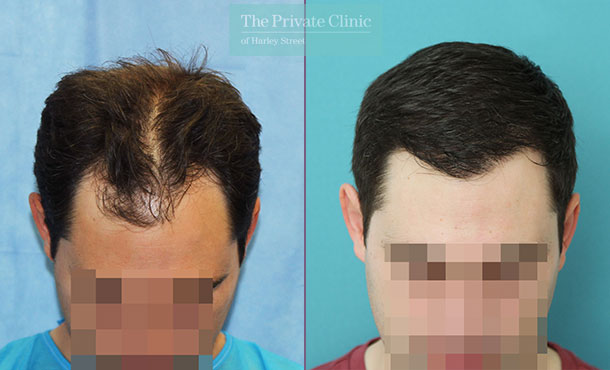
Why London—and Especially Harley Street—Leads in Modern Hair Transplants
London’s medical ecosystem has long been a magnet for global patients seeking precision-led cosmetic procedures, and hair transplant surgery is no exception. The city’s renowned Harley Street district concentrates some of the most experienced surgeons, advanced technology, and stringent clinical standards in one small radius. This combination of expertise and oversight helps explain why people researching a hair transplant uk journey often gravitate toward the capital. Clinics here typically operate under rigorous quality frameworks, using sterile, theatre-grade environments, and surgeon-directed protocols that minimize risks like infection, overharvesting, or poor graft survival.
What sets hair transplant harley street clinics apart is not just reputation, but the infrastructure that supports world-class outcomes. From careful pre-operative assessments (including scalp diagnostics, donor capacity analysis, and long-term planning) to the use of high-magnification graft handling and refined implantation tools, attention to detail is methodical. Surgeons with deep experience can tailor strategies to different hair types—straight, wavy, curly, and tightly coiled—adapting punch sizes and angles to protect follicular integrity. The result is more natural hairline design, improved density distribution, and a lower chance of visible scarring, especially critical for short hairstyles.
London’s clinics also tend to offer a broader continuum of care beyond the operating room. That includes medical therapy to stabilize hair loss before and after surgery, adjunctive treatments to nurture graft survival, and structured follow-ups to monitor growth at key milestones. Many centers emphasize realistic expectation-setting: designing a plan that protects the donor area for potential future procedures and acknowledging that hair loss is progressive. For those comparing options globally, the UK’s emphasis on patient safety, transparency, and surgeon accountability makes Harley Street a compelling anchor for anyone aiming for the best hair transplant london experience without compromising long-term scalp health.
Techniques, Planning, and Results: FUE, FUT, and DHI Explained
Three techniques dominate contemporary hair transplant practice: Follicular Unit Extraction (FUE), Follicular Unit Transplantation (FUT), and Direct Hair Implantation (DHI). With FUE, individual follicular units are microscopically extracted from the donor area (often the back and sides) and then implanted into recipient sites. It’s prized for tiny dot scars and rapid recovery, making it popular for short haircuts. FUT, by contrast, removes a narrow strip of scalp that is dissected under magnification to produce grafts; skilled closure techniques can leave a fine linear scar hidden by longer hair. DHI is a refinement of FUE that uses implanter pens to place grafts directly, streamlining the surgeon’s control over angle, depth, and direction during implantation.
Choosing between these methods hinges on donor hair characteristics, hair loss pattern, lifestyle, and aesthetic goals. A high-tempo professional who keeps a cropped fade might prefer FUE to avoid a line scar, while someone requiring a large number of grafts in a single session could consider FUT for efficient graft yield. For patients with tight scalps, curly or Afro-textured hair, or limited donor availability, an expert Harley Street surgeon’s nuanced judgment can be decisive, as curvature under the skin and follicle fragility must be carefully managed to reduce transection and preserve natural curl patterns.
Planning is as crucial as the technique itself. Sustainable density depends on realistic graft counts, strategic distribution across zones (frontal hairline, mid-scalp, crown), and a hairline design that respects age, facial proportions, and future recession. Seasoned teams map the donor region to avoid overharvesting, protect uniformity, and keep options open for future top-ups if hair loss progresses. Medication support—topical solutions or oral therapies—may be recommended to stabilize native hair, because surgery relocates follicles but does not halt ongoing miniaturization in untreated areas.
For those comparing clinics, reputation should align with demonstrable results: consistent photo documentation under standardized lighting, growth timelines over 12 months, and realistic density outcomes rather than edited highlights. When evaluating hair transplant london providers, look for surgeon-led consultations, transparent graft accounting, a clear breakdown of aftercare, and honest guidance about what can and cannot be achieved in a single session. The best teams combine precision extraction with careful graft hydration, minimal out-of-body time, and refined placement techniques that replicate natural hair groupings and flow.
Real-World Pathways: Case Studies, Recovery Timelines, and Aftercare That Matter
Case studies help illustrate what’s possible—and what a thoughtful plan looks like. Consider a 32-year-old with Norwood Class III recession at the temples and frontal hairline. After a detailed assessment of donor density and hair caliber, the surgeon recommends an FUE session of 1,700–2,000 grafts focused on redefining the frontal third. The hairline is set conservatively—slightly higher and age-appropriate—to conserve grafts for future needs. Implantation prioritizes natural micro- and macro-irregularities at the hairline to avoid a “straight edge” look, with single-hair grafts at the front and multi-hair units placed behind for density. At 6 months, early coverage emerges; by 12 months, the result is fuller yet refined, blending seamlessly with native hair.
In another scenario, a 45-year-old woman with early diffuse thinning (Ludwig I) seeks subtle density restoration. Here, a smaller FUE plan of 1,000–1,200 grafts is combined with ongoing medical therapy to protect native hair. The approach distributes grafts strategically across the mid-scalp and parting line, avoiding recipient sites that would compromise fragile existing follicles. Because female pattern hair loss often progresses differently than male patterns, the surgeon emphasizes maintenance strategies and careful styling guidance post-procedure. The outcome at 9–12 months is a softer, more shaded scalp appearance rather than a dramatic “new hairline,” consistent with goals for natural femininity.
For Afro-textured hair, specialized expertise is essential due to the follicle’s curl beneath the skin. A tailored FUE plan employs appropriately sized punches, shallow angles, and slower, methodical extraction to minimize transection. Session sizes may be smaller to prioritize graft survival. The payoff is uniquely natural framing and curl preservation, with careful donor management to maintain an even look in short hairstyles. These examples underscore why many patients screen for hair transplant harley street teams with breadth across hair types, not just a single technique.
Aftercare and recovery are integral to success. Expect mild swelling around the forehead for a few days, pinpoint scabbing at the recipient sites, and temporary shedding of transplanted hairs in weeks 2–6 (a normal phase before new growth). Clinics typically provide saline sprays, gentle cleansing protocols, and sleeping guidance to protect grafts during the initial window. Exercise, saunas, and direct sun exposure are paused briefly to support healing. New growth often begins around month 3–4, with most cosmetic improvement visible between months 6–10 and full maturation by 12–15 months. Adjunct therapies—nourishing scalp care, low-level light therapy, and individualized medical regimens—may be employed to support both transplanted and native hair.
Selecting the right partner in the hair transplant uk landscape comes down to transparent communication, rigorous surgical standards, and results you can scrutinize over time. Hallmarks of the best hair transplant london providers include surgeon-led planning, meticulous donor conservation, and comprehensive support that treats hair restoration as a long-term journey rather than a single-day procedure. When these elements align, patients gain not just coverage and density, but a renewed sense of confidence grounded in natural, sustainable aesthetics.